PURE EXPRESSIONS

Vanuatu

Malekula Island

(Pinalum Village)

70% Dark Chocolate

One of our most polarizing Pure Expressions. This 70% dark chocolate begins with deep cocoa, then turns toward tanned leather, clean earth, and unmistakable woodsmoke. Think smoked bourbon: some tasters savor its intensity; others prefer gentler origins. Either way, it is difficult to forget.

The cacao comes from small family farms surrounding Pinalum on Malekula, where old Amelonado trees predominate. The supplier later noted that some bags from the 2024 crop carried a smoky overtone; this bar captures that distinctive lot expression.

Naturally Occurring Tasting Notes

Deep Cocoa • Tanned Leather • Woodsmoke

$7.50

The Details Behind the Flavor

The Cacao Record

Vanuatu — 2024

Country

Vanuatu

Region

Malekula IslandPinalum village, western Malekula

Elevation

120 m · Inland tropical hills

Cacao Identity

Ancient Genetic GroupAmelonado

Harvest

2024Second Harvest

Fermentation

Tiered Wooden-Box Fermentation

Fresh cacao from Pinalum’s smallholder farms was combined and fermented in tiered wooden boxes for approximately 5–6 days. Shared processing allows many small harvests to form batches large enough for more consistent fermentation.

Detailed records covering box dimensions, turning intervals, temperature development, and individual farm contributions were not retained for this lot.

Drying

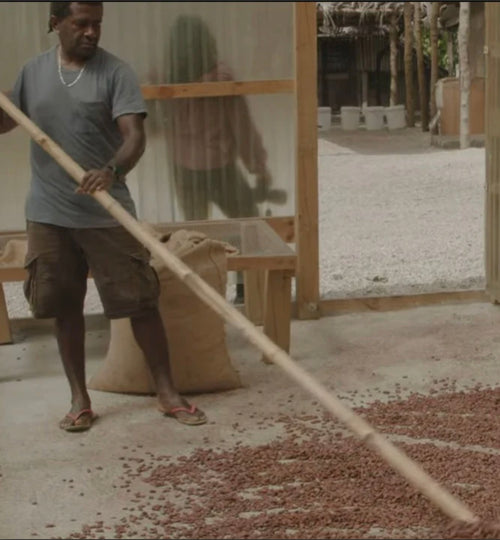
Sun-Dried on Concrete Patios

Following fermentation, the cacao was sun-dried on concrete patios for approximately 7 days. Detailed information about turning frequency, weather interruptions, final moisture targets, or storage conditions was not retained.

Certifications

Gaston Chocolat is a Certified B Corporation.

Producer

Pinalum smallholder communitySourced with Specialty Import Partner

Roast

Balanced

Genetics / Pedigree

Predominantly Old Amelonado

Approximately 90 percent of the established cacao trees surrounding Pinalum are reported to be old Amelonado introduced during the late nineteenth century.

Amelonado is one of cacao’s recognized ancient genetic groups. Detailed genetic testing or cultivar-level documentation was not provided for this specific lot, so the identity is based on retained sourcing records rather than independent DNA analysis.
Producer Profile

This cacao comes from a community of small farms surrounding Pinalum village on western Malekula. The island is overwhelmingly rural and agricultural, and cacao is grown within diversified family farms rather than on a single centralized estate.

Fresh cacao from the surrounding farms is brought together for shared post-harvest processing. Centralized fermentation allows many small harvests to become batches large enough to manage consistently while giving individual growers access to experienced fermentation and drying.

Gaston Chocolat, founded by Olivier and based on the neighboring island of Efate, helped expand the community’s central fermentary and develop an export market for cacao not needed by Vanuatu’s small domestic chocolate industry.

Why We Chose This Source

Vanuatu is a small and isolated origin whose cacao could easily remain invisible beyond the islands where it grows. Yet the old Amelonado trees surrounding Pinalum produce something immediately memorable: chocolate of tremendous depth, carrying cocoa, leather, earth, and woodsmoke without becoming inaccessible.

We chose this cacao because it combines living genetic heritage with meaningful community opportunity. Exporting Pinalum’s surplus cacao creates a larger market for the growers, supports more consistent shared processing, and gives these old trees a stronger reason to remain part of Malekula’s agricultural future.

The flavor is compelling, but so is what it represents: a remote community transforming many small harvests into a cacao worthy of being known far beyond its shores.

Vanuatu — 2024

Flavor of Place

Cacao from a Remote Pacific Island

On the remote island of Malekula, cacao grows within a warm tropical landscape shaped by volcanic soils, abundant rainfall, and the surrounding Pacific. The farms near Pinalum sit among mixed gardens and forest rather than expansive plantations, creating a distinctly intimate agricultural landscape.

This setting produces cacao with remarkable depth. Deep cocoa leads the profile before turning toward tanned leather, clean earth, and woodsmoke. Beneath that darker character is a restrained sweetness reminiscent of dried banana and cherimoya—an expression that feels both rustic and deeply approachable.

Cacao from a Remote Pacific Island
The tropical landscape surrounding Pinalum on Malekula Island.

Living Cacao Heritage

Old Trees, Enduring Character

Cacao was introduced to Malekula during the late nineteenth century. Around Pinalum, an estimated 90 percent of the established trees are old Amelonado, preserving a genetic heritage that has endured for generations within the island’s farms.

Amelonado belongs to one of cacao’s ancient genetic groups. Here, it produces a bold and unusually versatile expression: intensely chocolate-forward, structured enough for darker bars, yet approachable enough to work beautifully in milk chocolate and ingredient-driven recipes.

These are not newly selected commercial cultivars. They are trees carried forward through continued cultivation—a living connection between Malekula’s agricultural history and the chocolate made from it today.

Old Trees, Enduring Character
Amelonado cacao growing on Malekula Island.

People & Provenance

Building a Future for Pinalum Cacao

This cacao does not come from a single estate. It is produced by a community of small farms surrounding Pinalum village on western Malekula, where cacao is gathered and processed through a shared central fermentation program.

Olivier of Gaston Chocolat had worked with the Pinalum community for years, making bean-to-bar chocolate on the neighboring island of Efate. Because the local market could absorb only part of the community’s harvest, the central fermentary was expanded to prepare cacao for export.

That effort created an opportunity to improve fermentation consistency, reach additional chocolate makers, and pursue stronger farmgate prices. Each lot represents many small harvests brought together through shared processing—and a community working to give its heirloom cacao a more sustainable future.

Building a Future for Pinalum Cacao
Members of the cacao-producing community connected with Pinalum.

Thoughtfully selected

Simple & Clean Ingredients

Cocoa Beans*, Cane Sugar*, Cocoa Butter*

✦ Organic ingredients May contain traces of tree nuts, peanuts, wheat, or soy.

Continue the journey

Explore More Pure Expressions

Distinct cacao origins, expressed with clarity and care.

Bolivia

Pure Expressions

Bolivia

Alto Beni

70% Dark Chocolate

Naturally occurring tasting notes

Cherimoya Melon • Cinnamon • Oak

Harvest
2023
Cacao
Wild Criollo & Trinitario
$7.50
View Product
Dominican Republic

Pure Expressions

Dominican Republic

Cibao, Duarte Province

70% Dark Chocolate

Naturally occurring tasting notes

Tangy Chocolate • Dark Cherry • Molasses • Plum • Warming Spice

Harvest
2024
Cacao
Trinitario, Forastero & Criollo blend
$7.50
View Product
Mexico

Pure Expressions

Mexico

Chontalpa

70% Dark Chocolate

Naturally occurring tasting notes

Deep Cocoa • Date • Warm Caramel

Harvest
2023
Cacao
Trinitario hybrids, local Criollo & INIFAP selections
$7.50
View Product
Côte d'Ivoire

Pure Expressions

Côte d'Ivoire

The Ivory Coast

70% Dark Chocolate

Naturally occurring tasting notes

Fudgy Ganache • Toasted Nut

Harvest
2020
Cacao
Forastero
$7.50
View Product
Shop Pure Expressions →